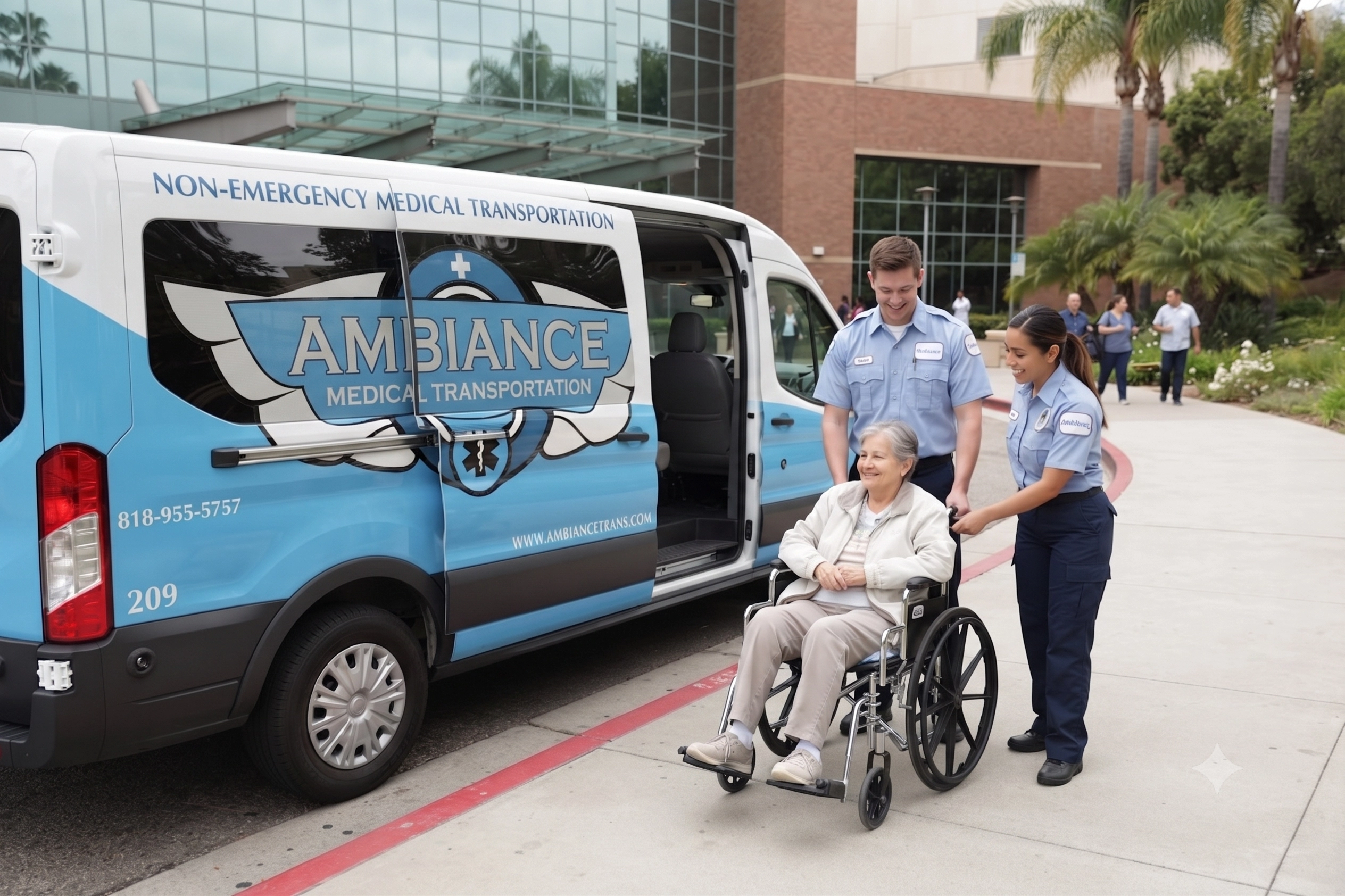
818-955-5757

818-955-5757

Get a Quote
Learn what non-emergency medical transportation (NEMT) is, who needs it, and when it's a safer, more affordable alternative to an ambulance.
Picture this: your mom just finished a hospital stay. She's stable, she's ready to go home, but she can't drive, can't sit up for long, and definitely can't climb into a regular car on her own. An ambulance feels like overkill. A regular rideshare feels risky. So what do you call?
This is where non-emergency medical transportation comes in. It's a service built for exactly this kind of situation - moving patients who need extra care, but not a 911 response.
This guide breaks down what NEMT actually means, who it's for, and how to tell when it's the right call for you or someone you're caring for.
So, what is NEMT? It stands for non-emergency medical transport - a transportation service for patients who need help getting to and from medical appointments, treatments, or facility transfers, but don't need an ambulance or emergency response.
Think of it as the gap between a regular taxi and a 911 ambulance. NEMT drivers and attendants are trained to handle medical equipment, mobility limits, and patient safety. But the patient isn't in a life-threatening situation.
Common uses include:
Not everyone needs NEMT. Most people can drive themselves or get a ride from family for a routine checkup.
But NEMT becomes the right choice when a patient has any of the following needs:
If any of these sound familiar, regular transportation - even with a helpful family member - probably isn't safe or practical.
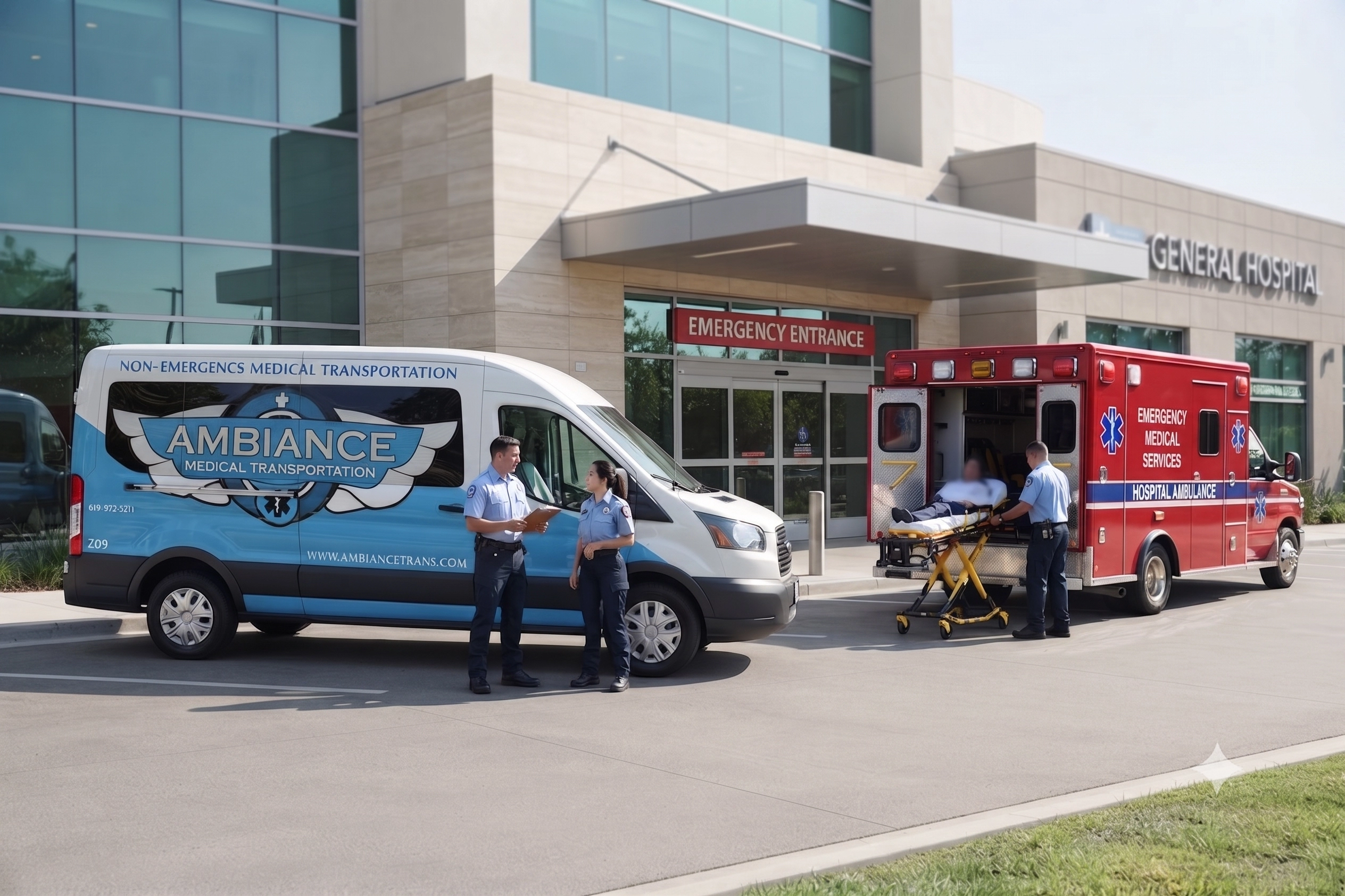
This is one of the most common mix-ups. Here's the short version.
Ambulance - for emergencies. Think chest pain, severe injury, or anything that's actively life-threatening. Ambulances are staffed for emergency medical response and come with emergency-level pricing.
Non-emergency medical transportation - for stable patients who still need medical-grade care during the ride. No siren, no emergency response, but still trained attendants and the right equipment for the patient's condition.
The cost difference is significant too. Ambulance rides for non-emergency situations often run far more expensive than NEMT, since you're paying for emergency-level staffing and equipment you don't actually need.
If the situation isn't life-threatening, NEMT services are almost always the safer, more affordable, and more comfortable choice.
NEMT isn't one-size-fits-all. Patient transportation services typically include:
A good NEMT provider should be able to match the vehicle and staff to the patient's specific condition, not just send whatever vehicle is available.

A simple way to decide: ask whether the patient could safely get into a regular car and sit through the ride without help. If the answer is no, it's time to book a medical ride service instead.
Some situations to watch for:
Ambiance Medical Transportation provides non-emergency medical transportation services across Los Angeles County, with vehicles and attendants matched to each patient's needs - wheelchair, gurney, oxygen-assisted, or stair-chair support included.
Every attendant is a certified EMT, and every driver holds an LA Department of Transportation permit, so patients get medical-trained care during the ride, not just a driver.
Whether it's a hospital discharge, a standing dialysis appointment, or a long-distance transfer, the goal is the same: get patients where they need to go safely, comfortably, and without the cost of an ambulance they don't need.
If you're not sure whether you need NEMT or an ambulance, the safest move is to call and describe the situation. A good provider will tell you honestly which option fits - even if that means recommending an ambulance instead.
Need a ride to an appointment, discharge, or treatment? Call 818-955-5757