818-955-5757

818-955-5757

Get a Quote
Rideshare, a friend's car, or medical transport after surgery? Compare your options and learn how to choose a safe, comfortable ride home.
The right ride depends on your surgery, your surgery center’s rules, and how much help you will need getting from the recovery area to your own bed. For transportation home after surgery, start with what your surgeon and surgery center require, then pick the option that covers those rules.
Picture the end of surgery day. Your friend is circling the block, a rideshare app is open on your phone, and a transport company’s number is saved in your contacts. You are sore, foggy, and trying to decide.
Before you compare options, think about what the ride asks of you. You are coming out of anesthesia, and your body is tender.
Your surgeon’s discharge instructions set the real list. In general, a ride home after surgery calls for:
Keep this list in mind as you look at each option.
Ask your surgery center first, since many facilities have rules about who may take you home after anesthesia. A rideshare driver is a stranger who may not count under those rules.
Even if the facility allows it, a rideshare has limits. The driver focuses on the road and is not trained to help a groggy patient move. You may also be alone in the back seat with no one watching how you are doing.
For a minor procedure with a facility that accepts it, a rideshare may work. For anything where you need help standing, walking, or lying down, it leaves gaps.

A friend knows you, and that counts. A familiar face can calm you, and a friend may stay to help at home.
Here are the limits to plan around:
Ask your surgery center whether a friend qualifies. Also ask your surgeon whether sitting upright in a regular car is okay for your procedure.
It makes sense when you need help moving, when your surgeon wants a specific position, or when you want a trained person watching you on the ride. It also fits when no friend or family member is free.
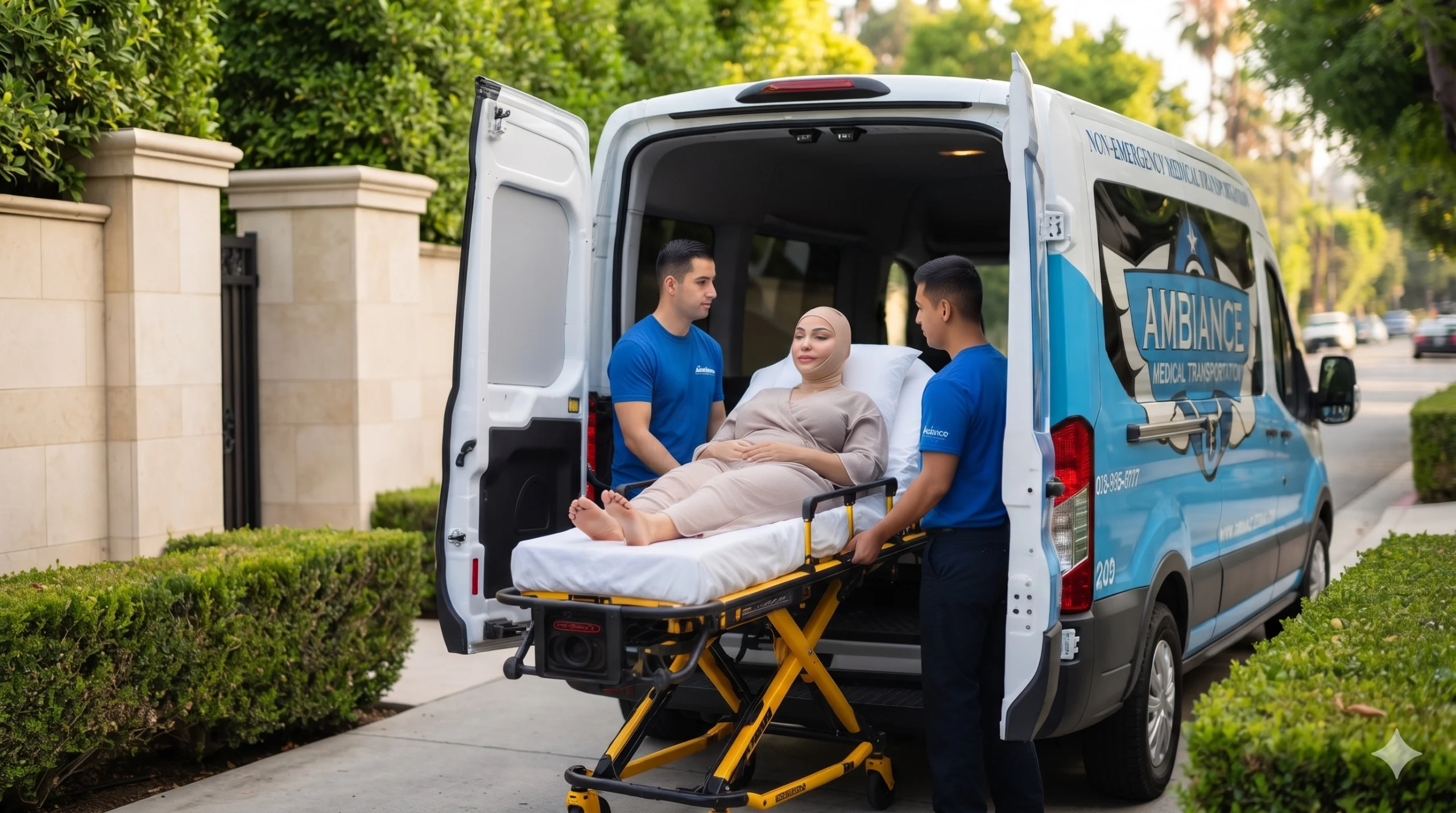
Our rides are bed to bed. You lie flat from your bed to our vehicle to your bed at home, instead of being moved from a bed to a wheelchair to a car seat and back again.
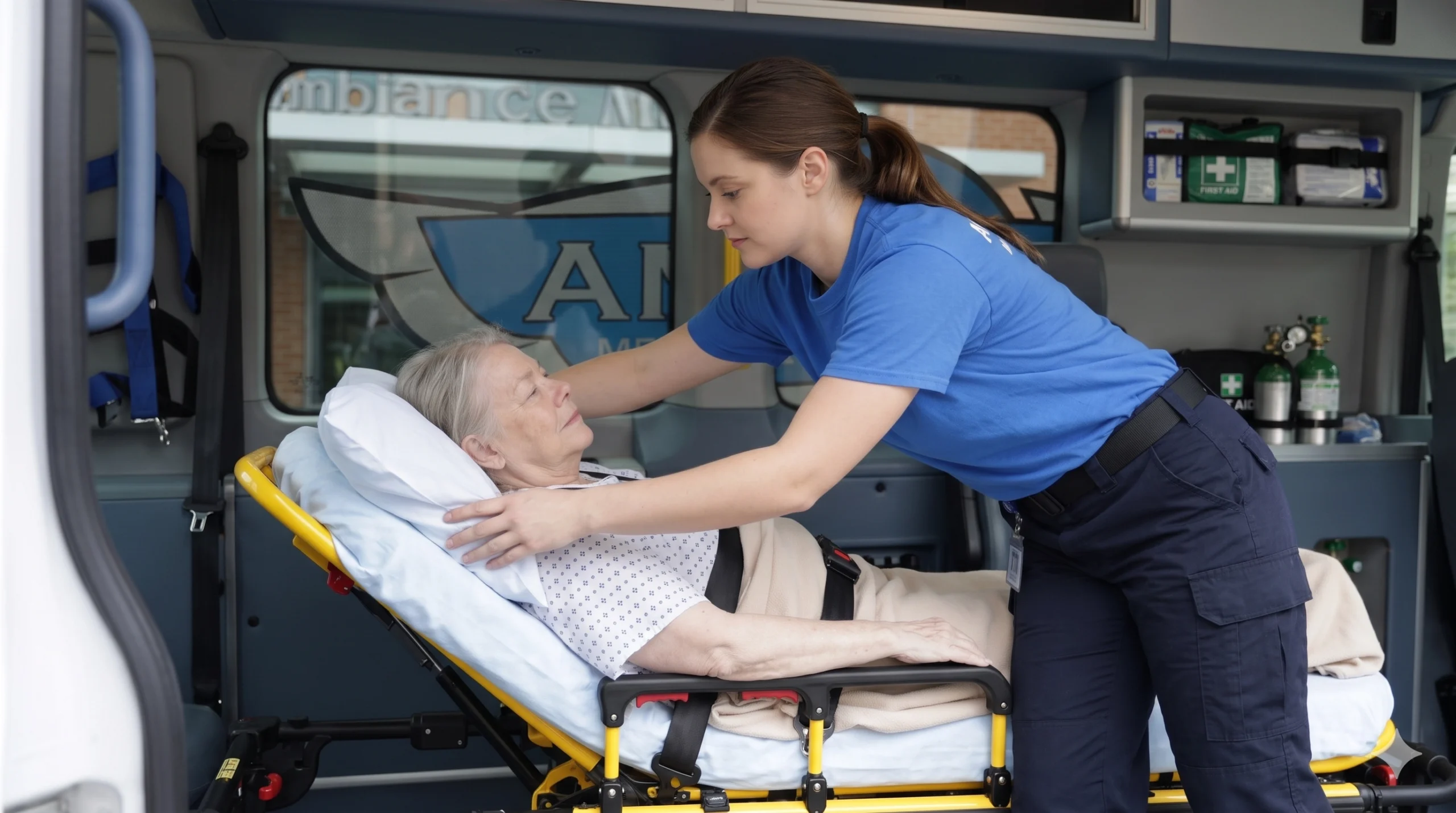
You ride lying on a secured gurney with safety restraints, and our EMT-certified team brings you through your door. Fewer position changes may help reduce strain on your incisions. Ask your surgeon whether lying flat is right for you.
We provide non-emergency medical transport. Our team can help with safe handling and notice when something looks wrong, but we do not provide clinical care.
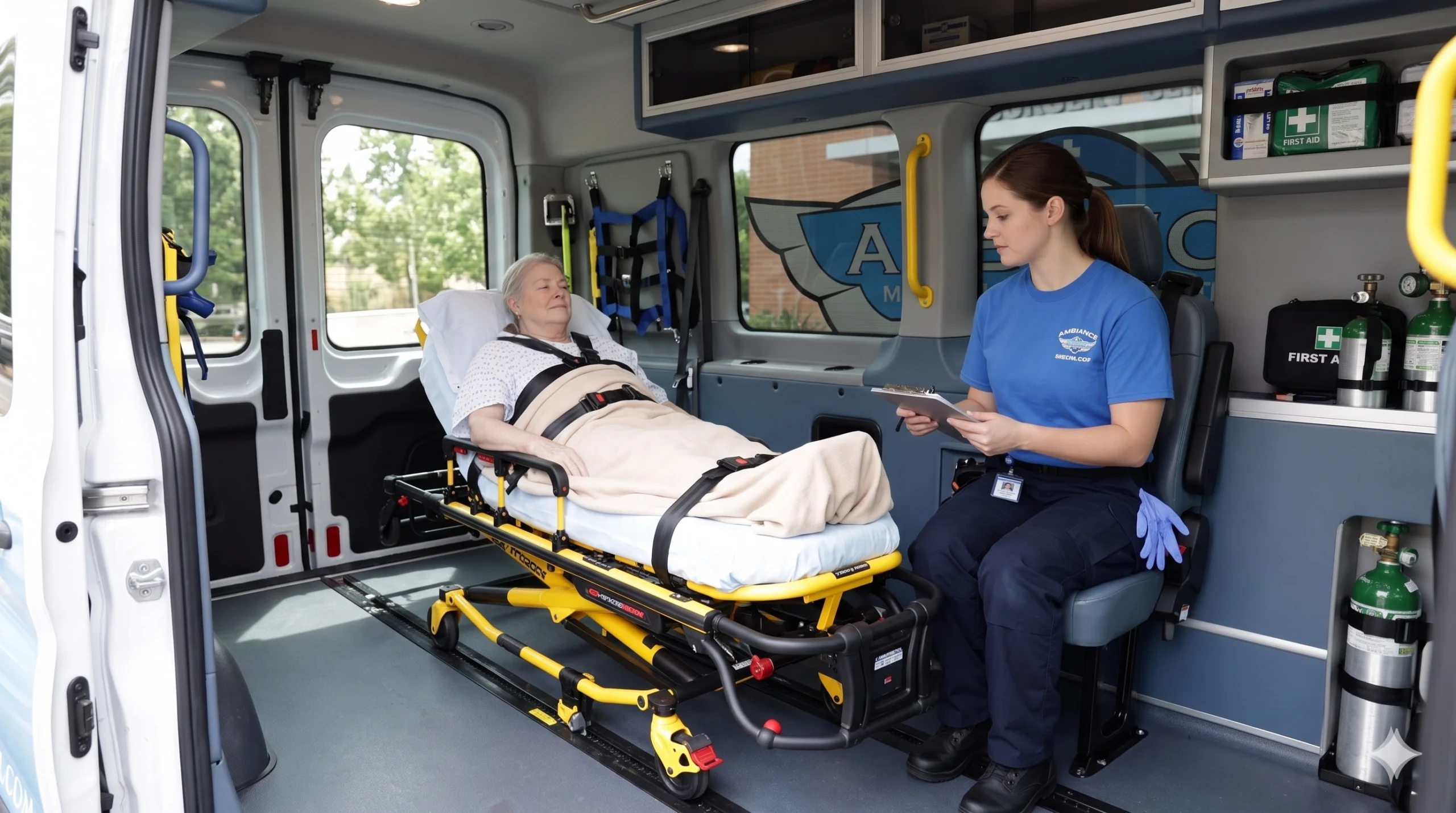
Here is how the options compare:
With a rideshare service, the driver focuses on the road rather than monitoring your condition. Help with moving or getting in and out of the vehicle depends on the driver. Rideshare vehicles do not offer the option to lie flat, and assistance usually ends at the curb.
When traveling in a friend’s car, the driver focuses on driving unless another person accompanies you to provide support. Help with moving depends on your friend's ability to assist. You will need to travel in a regular seated position, and help getting to your bed depends on your friend's availability and ability.
Medical transport provides a more supportive option for patients who need additional assistance after a medical procedure. An attendant focuses on your comfort and safety throughout the journey. An EMT-certified team can help with safe patient handling, and you may be able to travel lying flat on a secured gurney if your surgeon approves. With door-through-door assistance, the team can help you from your bed at pickup to your bed at home.
The cost varies depending on your transportation needs, but we work with insurance providers to help offset patient costs.
Match your situation to the option that covers it:
If you look at transport companies, ask whether the company employs EMTs, whether the gurney is secured with restraints, and whether the ride is private and ends at your bed. Ask them the same way on every call so the answers compare cleanly.
It can. After abdominal procedures, getting in and out of a seat and wearing a belt across your midsection can be hard. A ride home after abdominal surgery can be planned around how your surgeon wants you to move.
After cosmetic procedures, many people also want privacy. A ride planned around plastic surgery recovery can keep the day calm and discreet.
If you are traveling from far away, ask about long-distance medical transportation so you are not arranging it at the last minute.
At Ambiance Medical Transportation, we provide transportation home after surgery across Los Angeles County, including Beverly Hills. Our drivers and attendants are EMT certified, and every driver holds an LA Department of Transportation permit.
If you want to see how bed-to-bed rides work from the surgery center, start with a ride home from the hospital or surgery center. Send us your surgery date, pickup address, and your surgeon’s positioning words, and we will go over your options.
This article is general information, not medical advice. Please follow your surgeon’s instructions.
Choosing transportation home after surgery? Arrange your ride home from the surgery center before surgery day.
Can a friend ride along if I book medical transportation?
Ask us when you book. Tell us who you would like with you, and we will go over what works for your pickup.
Should I have a backup ride?
It helps. Discharge times shift, and a friend’s schedule can change, so a backup plan keeps the day from falling apart.
What if my surgery center only accepts a certain kind of ride?
Follow the facility’s rule. Ask which options it accepts, and share that with any transport company you call. We do not claim to meet any facility’s rules.
Is medical transportation only for patients who cannot sit?
No. Some patients use it for the support, the privacy, or because no one is free. Your surgeon and your plan decide what fits.
Will I need rides after the first day?
Often yes, to follow-up visits and tests. We plan rides to your surgeon appointments around the same instructions.