818-955-5757

818-955-5757

Get a Quote
Learn why EMT-trained drivers matter after surgery, how they support safe patient transport after anesthesia, and what to look for in a medical transport team.
An EMT-trained driver matters after anesthesia because you may be too groggy to notice or say when something feels off. EMT transportation after surgery adds trained people to the ride who can help with safe handling and notice when something looks wrong.
Picture the ride home. You are drifting in and out, the road is moving, and you could not tell anyone if you wanted to.
Anesthesia wears off slowly, and you may not feel the same from one hour to the next. Some people feel clear for a while, then get sleepy again.
Common after-effects include sleepiness, nausea, dizziness, and slower thinking. Some people also have trouble remembering what they were told. How you feel depends on your procedure, the type of sedation, and your body.
Your surgeon’s discharge instructions come first, including the warning signs that mean you should call the office.
Because the same fog that makes you sleepy can make it hard to know you are in trouble. You might feel “fine” and still be unsteady. Or you might feel awful and not have the words to explain.
That puts the job of watching on someone else. A family member can do it, but they are often anxious, distracted by driving, or unsure what to look for.
This is the gap a trained team can help fill. Someone in the vehicle whose job is to watch you, and not the road, changes the ride.
EMTs are trained in basic patient handling and in recognizing when a person looks unwell. On a ride home after surgery, that can show up in a few ways:
We provide non-emergency medical transport. We do not give medicine, treat conditions, or replace your surgeon’s care.
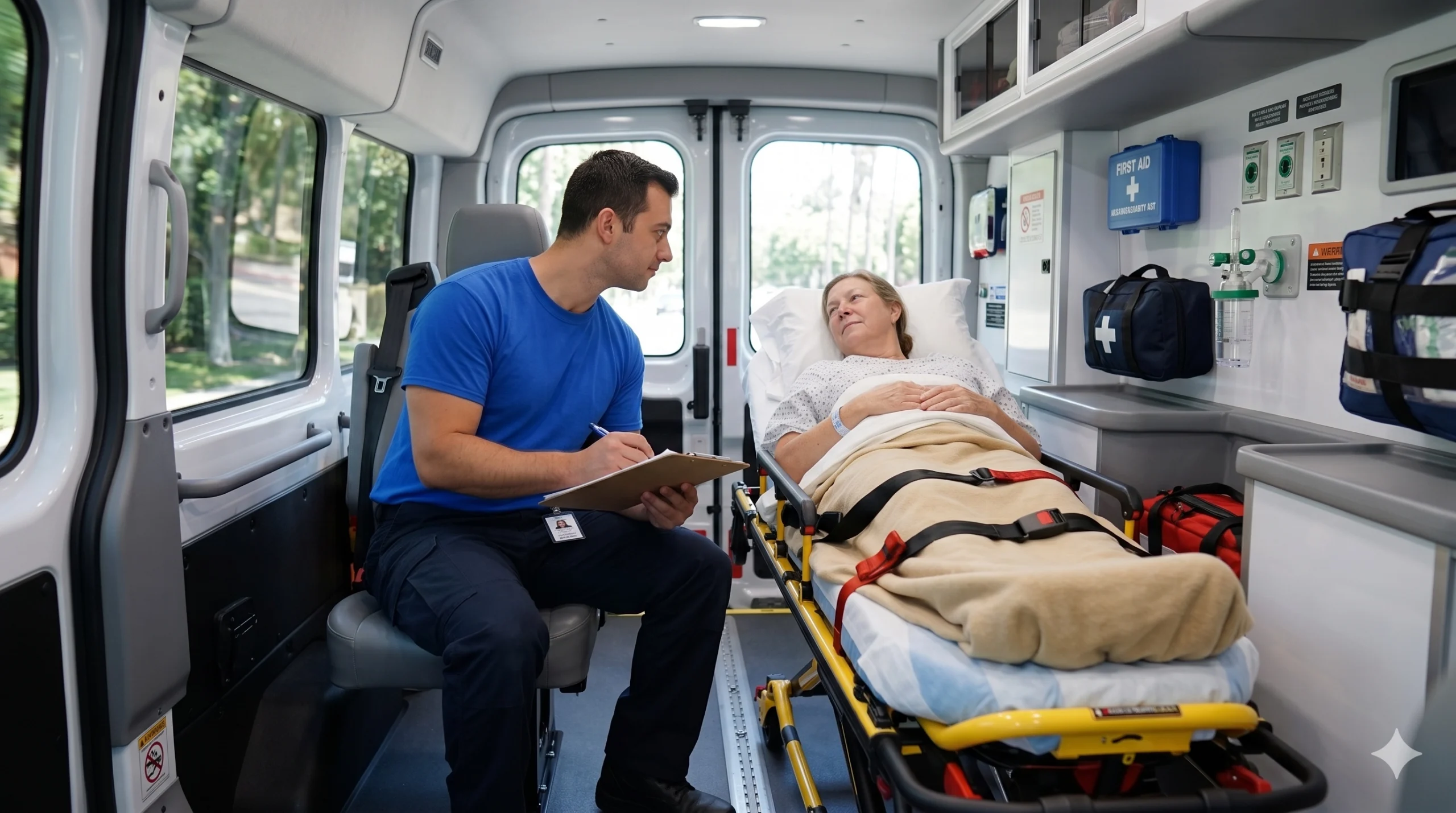
We are not diagnosing anyone. A team that spends time with patients can notice changes in how a person looks, sounds, or responds.
Examples include unusual sleepiness, new confusion, trouble answering simple questions, or a change in color. Your discharge sheet lists the specific warning signs for your procedure, and those are the ones to follow.
If something looks wrong, our team tells you and your family right away, and follows your surgeon’s instructions on who to call. When a situation looks urgent, we call for emergency help.

A ride after surgery asks a lot of the person helping you. You are sore, you may be embarrassed, and you may not remember much of it later.
People with healthcare training usually learn to slow down and explain each step before they move you. They also learn to protect your dignity, from the way they speak to how they handle your gown or garment.
That matters most for patients who feel exposed, including people leaving cosmetic procedures and anyone who is frightened of being moved.
The ride home is the first time your body moves after surgery, and the way you are moved affects how much strain your tender body takes on. A trained team makes that first move gentler and more careful.
One option is bed-to-bed transport. You lie flat from your bed to our vehicle to your bed at home, instead of being moved from a bed to a wheelchair to a car seat and back again. Fewer position changes may help reduce strain on your incisions.
You ride on a secured gurney with safety restraints, and our team brings you through your door. Ask your surgeon whether lying flat is right for you.
Check with your surgery center about who counts as a responsible adult for discharge. We do not claim to meet any facility’s rules, so ask them directly, and then line up your ride home from the hospital or surgery center early.
A company can say “trained” without much behind it. Ask these questions and listen for specific answers:
Good companies answer these plainly. We are glad to answer them for you.
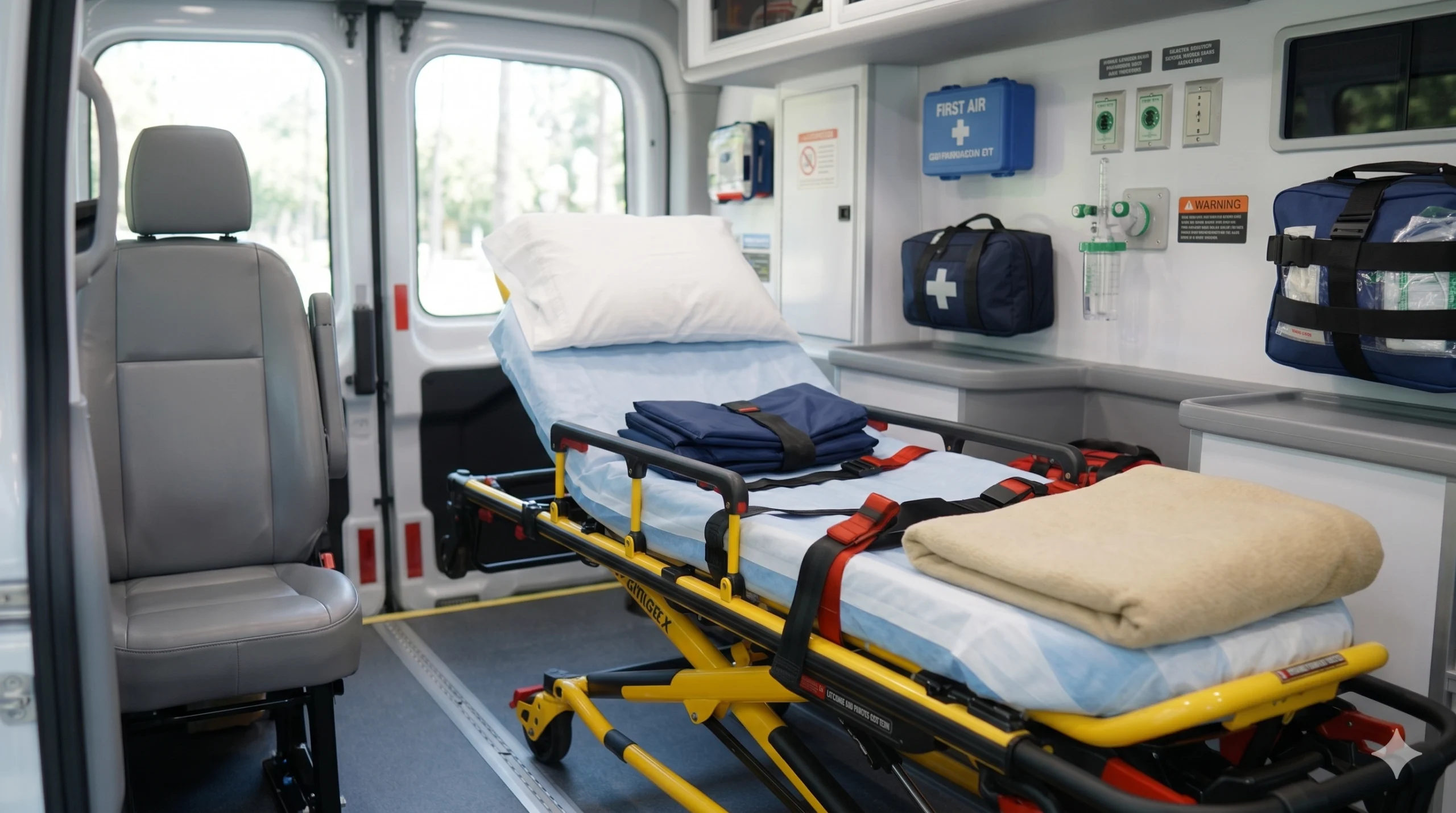
It can. After abdominal procedures, safe handling matters most, since a sore midsection does not like sudden pulls. A ride home after abdominal surgery can be planned around how your surgeon wants you to move.
After cosmetic surgery, privacy and gentle handling often matter more. A ride planned around plastic surgery recovery can keep the day calm and discreet.
At Ambiance Medical Transportation, we provide EMT transportation after surgery across Los Angeles County, including Beverly Hills. Our drivers and attendants are EMT certified, and every driver holds an LA Department of Transportation permit.
We offer non-emergency medical transport, and our EMT-certified team can help with safe handling and notice when something looks wrong. We also plan rides to follow-up visits around your surgeon’s instructions.
Send us your surgery date, pickup address, and your surgeon’s positioning words. We will go over your options and plan the ride.
This article is general information, not medical advice. Please follow your surgeon’s instructions.
Planning EMT transportation after surgery? Set up your ride home from the hospital or surgery center before surgery day.
Is an EMT-trained driver the same as a nurse?
No. EMTs have different training from nurses, and neither replaces your surgeon. Our team helps with safe handling and watching how you look and respond, and does not provide treatment.
Will the attendant give me medicine?
No. We provide non-emergency transport. Follow your discharge sheet for medicine, and ask your surgeon’s office about timing.
What if I fall asleep during the ride?
Sleepiness is common after anesthesia. Tell our team if anything seems different from what your surgeon described, and we will help you reach the right contact.
Can an EMT-trained team count as my responsible adult?
Ask your surgery center. Each facility sets its own rule, and we cannot answer it for them.
Do I need an EMT-trained team after every surgery?
Not always. Your surgeon and your surgery center can tell you what level of help fits your procedure.