818-955-5757

818-955-5757

Get a Quote
Plan safe transportation home after surgery in Los Angeles with trained support, gurney options, and comfortable door-through-door service.
Your ride home is the first step of surgical recovery because it is the first time your body moves after surgery, and you make that trip groggy and sore. The way you get home affects how much your body has to bend and twist while it is still tender.
Picture the moment. You are leaving a surgery center in Los Angeles, still foggy from anesthesia. Someone is helping you toward the car, and a long drive is ahead.
This guide covers transportation home after surgery: what the first day feels like, how to prepare, and how to choose a safe ride. It is written for patients and for the family members helping them.
Most people feel groggy and sore. Some also feel sick to their stomach or cold.
Anesthesia can slow your thinking and balance for hours. Here is what people commonly report:
Your procedure and your body shape how you feel. Your surgeon’s discharge instructions are the guide that counts, including wound care and when to call the office.
Do not drive yourself. Hold off on big decisions and signing papers until the anesthesia wears off.
Set up a simple, clear space before surgery day. When you are sore, bending, reaching, and climbing are the last things you want to do.
Here is a starting list:

Your surgeon’s office may give you a checklist. Follow it over any general list, including this one.
Surgery centers often require an adult to take you home after anesthesia. Each facility sets its own rules, so ask yours before surgery day.
Ask whether a medical transport team can serve as your responsible adult. We cannot answer that for any facility. Your surgery center can.
Whether you leave from a hospital or a surgery center, plan your hospital discharge transportation early. A ride arranged ahead of time is one less thing to solve while you are still groggy.
Because the ride home is the first time your body moves after surgery, and a standard car ride asks for a lot of movement. Here is what it often looks like:
That is five position changes in one afternoon, while you are sore and unsteady. Each one can pull on a tender area, and for some procedures that may add strain on your incisions.
Your surgeon can tell you which movements to avoid.
Bed-to-bed means you lie flat from your bed to our vehicle to your bed at home. You are not moved from a bed to a wheelchair to a car seat and back again.
Our team uses a secured gurney with safety restraints. That is our gurney transport service. Fewer position changes may help reduce strain on your incisions.
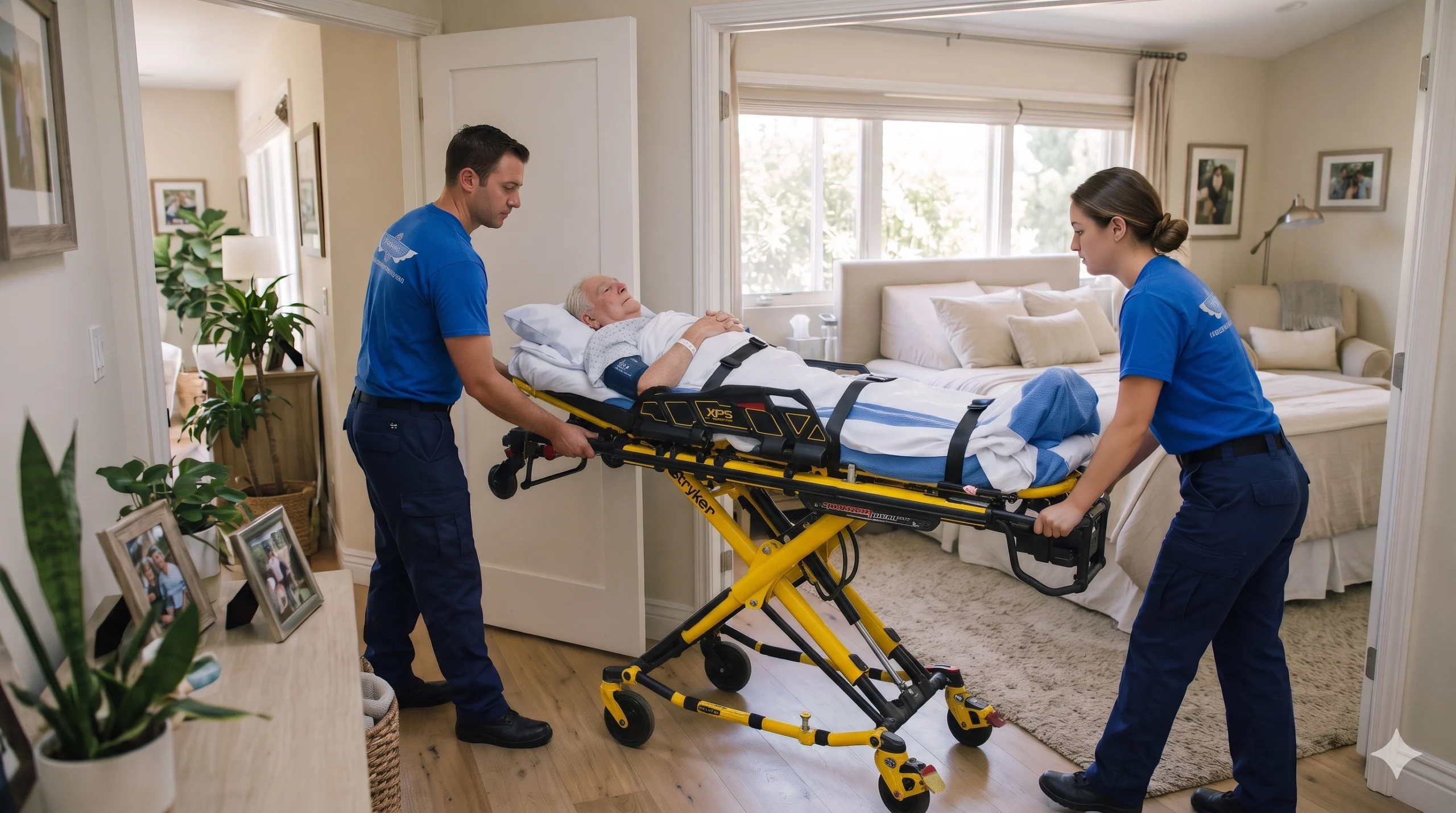
Ask your surgeon whether lying flat is right for you. If your home has steps, tell us when you book. We offer electric stair chair assistance for stairs.
Ask every company you are considering these questions. Good ones answer them without hesitation:
We are glad to answer each of these before you book.
It can. Your procedure shapes how you can sit, lie, and move.
After cosmetic surgery, comfort and privacy usually matter a great deal. Our plastic surgery transportation is built around both. Some surgeons also give specific sitting or lying instructions after procedures like a BBL, so follow yours.
After abdominal procedures, twisting to get into a car or a seat belt across your midsection can be uncomfortable. Our abdominal surgery transportation is planned with that in mind.
The same planning applies after joint or spine surgery.

At Ambiance Medical Transportation, we provide transportation home after surgery across Los Angeles County, including Beverly Hills. Our drivers and attendants are EMT certified, and every driver holds an LA Department of Transportation permit.
We offer gurney and wheelchair transport, with door-through-door service. Families planning after cosmetic or abdominal procedures can read about our plastic surgery transportation and abdominal surgery transportation.
We provide non-emergency medical transport. Our EMT-certified team can help with safe handling and notice when something looks wrong.
Tell us your procedure, your pickup location, your home setup, and your surgeon’s preferences. We will go over your options with you.
This article is general information, not medical advice. Please follow your surgeon’s instructions.
Planning your ride home? Learn about our hospital discharge transportation and arrange your ride before surgery day.
What is non-emergency medical transportation after surgery?
It is a scheduled ride with trained staff and medical transport equipment for people who need help moving but do not need emergency care. We provide transportation, not medical care.
Can I take a rideshare home after surgery?
Ask your surgery center first, since some facilities have rules about who can take you home. Rideshare drivers usually are not trained to help patients move after surgery.
Is lying flat right for every surgery?
No. Some patients are told to sit at a set angle or avoid certain positions. Your surgeon makes that call.
What if my home has stairs?
Tell us when you book. Stairs are one of the first things we plan around, and we will talk through the best way to get you inside.
Will insurance cover my ride?
Coverage varies by plan and by situation. We work with insurers to help offset patient costs, so call us and we will go over your options.